Benz, Daimler and the petrol car
Two Germans who never met, a four-stroke engine, and the drive that showed the world.
Before Benz
The motor industry grew from the petrol engine, developed in the 1860s and 1870s mainly in France and Germany. Encyclopaedia Britannica: Automotive industry
The four-stroke principle used in most car engines was discovered by the French engineer Alphonse Beau de Rochas in 1862. Encyclopaedia Britannica: History of the automobile The four-stroke cycle is often called the Otto cycle, after Nikolaus Otto, who designed an engine on that principle in 1876. Encyclopaedia Britannica: History of the automobile
Étienne Lenoir in France and Siegfried Marcus in Austria built petrol-type vehicles in 1862 and 1864–65, before Benz and Daimler, but neither kept going. Encyclopaedia Britannica: History of the automobile
Siegfried Marcus built four of the world’s earliest petrol cars. His first, in 1864, had no clutch, so the back wheels had to be lifted off the ground to start it. Encyclopaedia Britannica: Siegfried Marcus Marcus’s second car is kept in Vienna’s Technical Museum and is probably the oldest petrol car still in existence. Encyclopaedia Britannica: Siegfried Marcus
Marcus himself later called the car “a senseless waste of time and effort”. Encyclopaedia Britannica: History of the automobile
Karl Benz
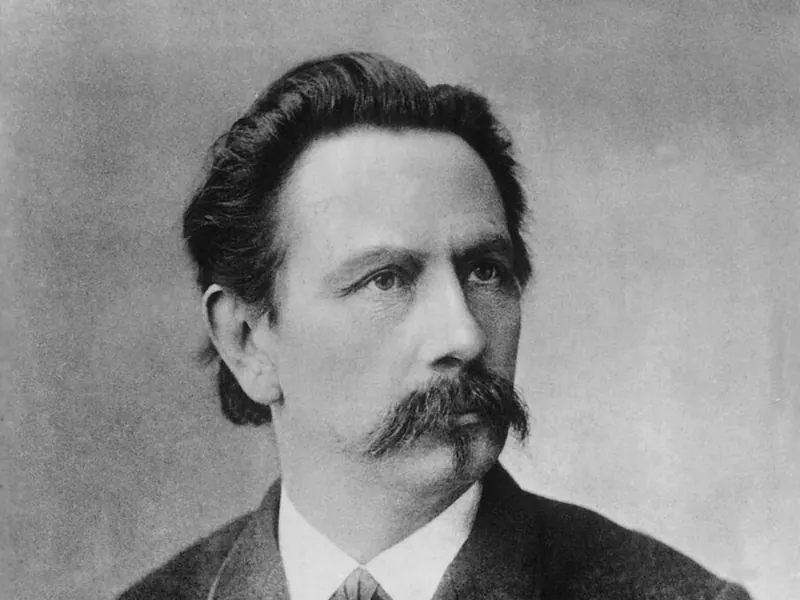
Karl Benz was born in Karlsruhe in 1844 and studied at Karlsruhe Polytechnic. Encyclopaedia Britannica: Karl Benz
Karl Benz designed and, in 1885, built the world’s first practical car powered by an internal-combustion engine. Encyclopaedia Britannica: Karl Benz
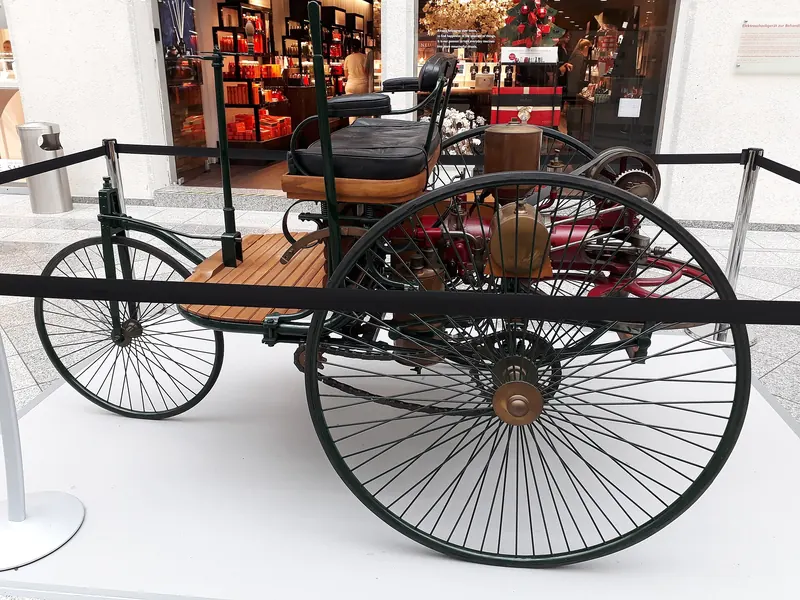
Benz’s three-wheeled Motorwagen first ran early in 1885, and its design was patented on 29 January 1886. It is now kept in Munich. Encyclopaedia Britannica: Karl Benz
On its first run the Motorwagen made four laps of a cinder track beside Benz’s small factory, stalling only twice before a broken chain stopped it. Encyclopaedia Britannica: History of the automobile
Benz made his first sale in 1888, to a Parisian called Émile Roger. By then about 50 workers were building his three-wheeler. Encyclopaedia Britannica: History of the automobile Benz & Cie. finished its first four-wheeled car in 1893. Encyclopaedia Britannica: Karl Benz
Bertha Benz’s drive
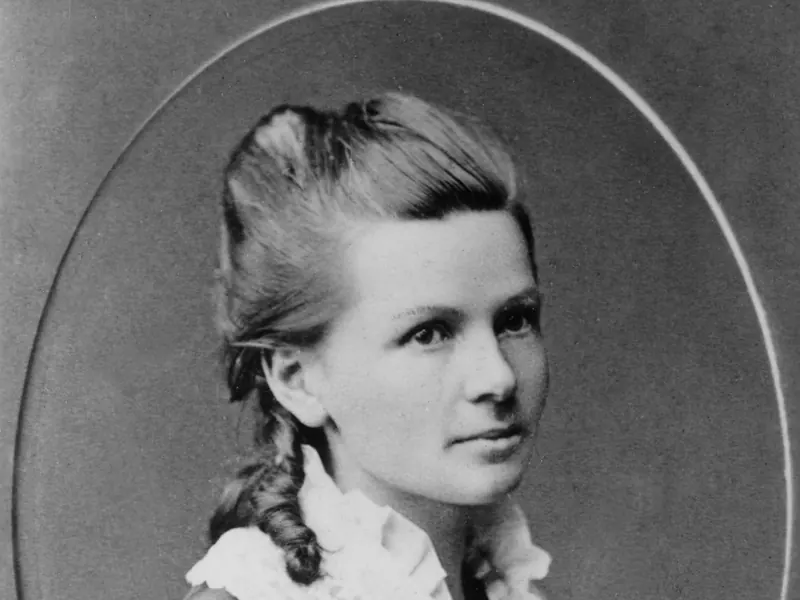
In August 1888 Bertha Benz drove the Motorwagen from Mannheim to Pforzheim with her sons Eugen and Richard: the first long-distance drive in a car. Encyclopaedia Britannica: Karl Benz
She set off without telling Karl, leaving a note on the dining table to say they were visiting her mother in Pforzheim. Encyclopaedia Britannica: Bertha Benz
Britannica’s article on Bertha Benz says the trip took about 13 hours over about 60 miles (96.6 km) of unpaved roads. Encyclopaedia Britannica: Bertha Benz Britannica’s Karl Benz article puts Bertha’s drive at some 66 miles (106 km). Encyclopaedia Britannica: Karl Benz
- She bought fuel, a cleaning agent called ligroin, from a pharmacy in Wiesloch, which many people call the world’s first filling station. Encyclopaedia Britannica: Bertha Benz
- On the way she cleared a blocked fuel pipe with her hat pin and used her garter to fix the ignition. Encyclopaedia Britannica: Bertha Benz
- When the brake blocks wore out, a cobbler fitted them with leather strips, inventing brake pads. Encyclopaedia Britannica: Bertha Benz
- After pushing the car up hills, Bertha suggested a third, lower gear. Karl added it to all his later models. Encyclopaedia Britannica: Bertha Benz
Her road still exists as the Bertha Benz Memorial Route, and she joined the Automotive Hall of Fame in 2016. Encyclopaedia Britannica: Bertha Benz
Bertha had her dowry paid early so she could buy out Karl’s unreliable business partner. Encyclopaedia Britannica: Bertha Benz
Gottlieb Daimler and Wilhelm Maybach
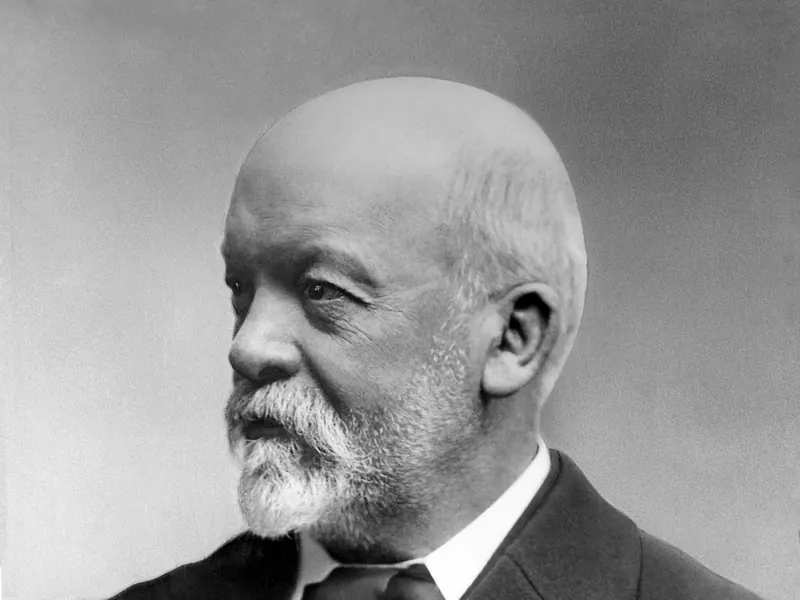
In 1872 Gottlieb Daimler became technical director at the firm of Nikolaus Otto, inventor of the four-stroke engine. Encyclopaedia Britannica: Gottlieb Daimler In 1882 Daimler and Wilhelm Maybach left Otto’s firm and set up their own engine workshop. Encyclopaedia Britannica: Gottlieb Daimler
Their engine was the first high-speed internal-combustion engine, designed to run at 900 revolutions per minute. Benz’s first engine ran at only 250. Encyclopaedia Britannica: History of the automobile
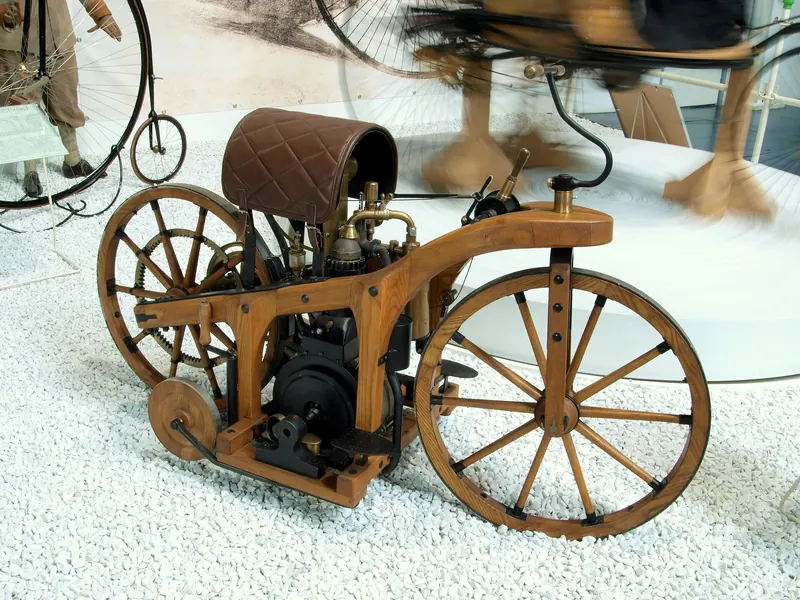
Daimler and Maybach fitted an engine to a wooden bicycle, which first ran on 10 November 1885. Encyclopaedia Britannica: History of the automobile Britannica says Daimler’s 1885 motor bicycle was perhaps the first motorcycle in the world. Encyclopaedia Britannica: Gottlieb Daimler
In 1886 Daimler drove a four-wheeled carriage, first built for horses, with a one-cylinder engine. In 1887 he powered a boat. Encyclopaedia Britannica: Gottlieb Daimler
Daimler’s 1889 car was built from the start as a car, with a light tubular frame, the engine at the back, belt-driven wheels and four speeds. Encyclopaedia Britannica: Gottlieb Daimler
Daimler-Motoren-Gesellschaft was founded at Cannstatt in 1890, and in 1899 it built the first Mercedes car. Encyclopaedia Britannica: Gottlieb Daimler
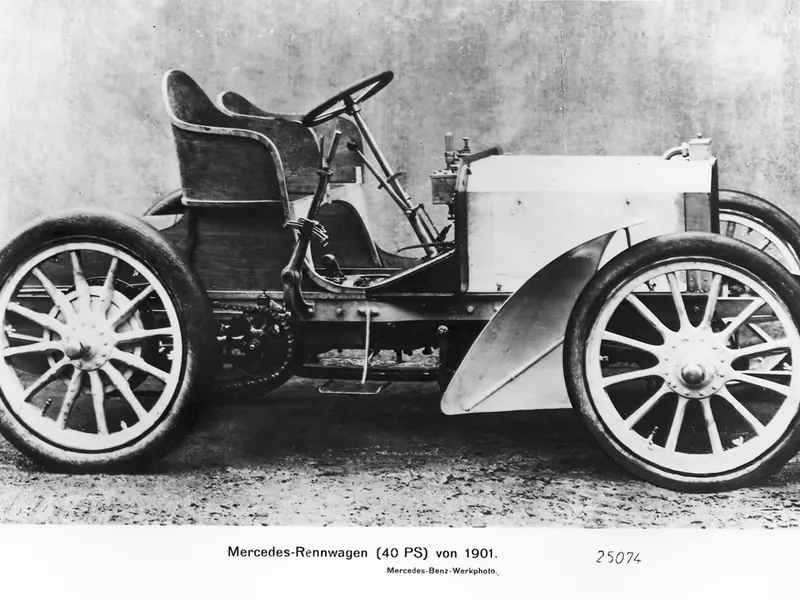
Wilhelm Maybach was chief designer of the first Mercedes cars, in 1900–01. Encyclopaedia Britannica: Wilhelm Maybach Maybach’s carburettor design was widely used from 1893. Encyclopaedia Britannica: Wilhelm Maybach
From 1909 Maybach and his son Karl built aircraft engines, including engines for Zeppelin airships. Encyclopaedia Britannica: Wilhelm Maybach
Rivals who never met
Oddly, Karl Benz and Gottlieb Daimler never met. Encyclopaedia Britannica: History of the automobile
The merger only came after both founders had died: their bitter rivalry over who invented the petrol car made it unthinkable before. Encyclopaedia Britannica: Automotive industry, growth in Europe The Benz and Daimler firms merged in 1926 to form Daimler-Benz, maker of Mercedes-Benz cars. Encyclopaedia Britannica: Karl Benz
The industry takes off
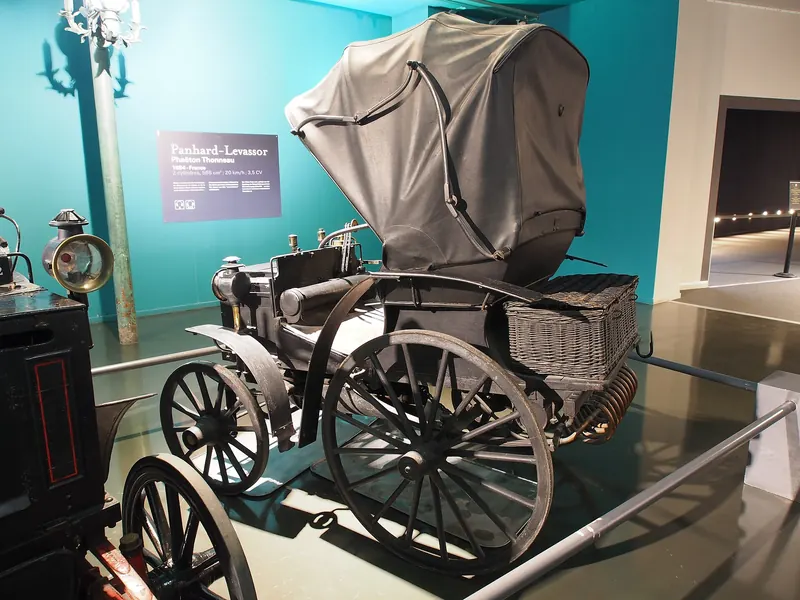
Daimler’s French licensees, René Panhard and Émile Levassor, made designs in 1891–94 that were true cars rather than carriages with engines added. Encyclopaedia Britannica: History of the automobile
Renault, Fiat and De Dion Bouton were among the famous makers that joined the motor industry in the 1890s. National Motor Museum: Birth of Motoring
Many early carmakers began making something else: Opel and Morris made bicycles, and Buick made plumbing, including the first enamelled cast-iron bath. Encyclopaedia Britannica: Automotive industry One American carmaker, Pierce, started out making birdcages. Encyclopaedia Britannica: Automotive industry
Next: Ford and the Model T →