Motoring in Britain
A man with a red flag, a run to Brighton, a penny Highway Code and the Mini.
The Red Flag Act
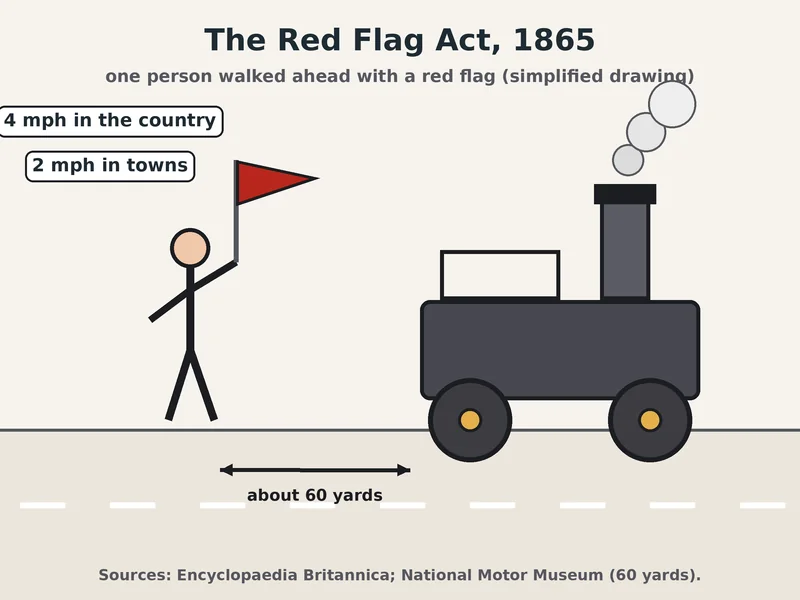
Britain’s Locomotives on Highways Act of 1865 cut speeds to 2 mph in towns and 4 mph in the country. Encyclopaedia Britannica: History of the automobile
It was nicknamed the Red Flag Act because a crew of three had to go with each vehicle, one walking in front with a red flag. Encyclopaedia Britannica: History of the automobile The flag-carrier had to walk about 60 yards ahead. National Motor Museum: London to Brighton Veteran Car Run
An 1878 Act cut the distance to 20 yards and dropped the need to carry a red flag. National Motor Museum: London to Brighton Veteran Car Run
The Act wasn’t repealed until 1896, and by then it had held back road transport in the British Isles for decades. Encyclopaedia Britannica: History of the automobile
The first British motorists
By the end of 1895 there were probably only 14 or 15 motor cars in Britain. National Motor Museum: London to Brighton Veteran Car Run The Hon. Evelyn Ellis is now generally accepted as the first motorist on a British road, after he imported a Panhard et Levassor in June 1895. National Motor Museum: motoring FAQs
Frederick William Bremer, a plumber and gas fitter, built the first British four-wheeled petrol car. It first ran on a public road in December 1894. National Motor Museum: motoring FAQs
In 1895 John Henry Knight of Farnham built the first purpose-built petrol three-wheeler to run on British roads. It is on show at the National Motor Museum. National Motor Museum: motoring FAQs Frederick Lanchester’s first four-wheeled petrol car was tested on the road in early 1896. National Motor Museum: motoring FAQs
Walter Arnold of East Peckham, Kent, was the first person in Britain convicted of speeding, on 28 January 1896. He was doing about 8 mph in a 2 mph town limit. National Motor Museum: motoring FAQs He was fined one shilling, and the policeman who caught him was riding a bicycle. National Motor Museum: motoring FAQs
The Emancipation Run
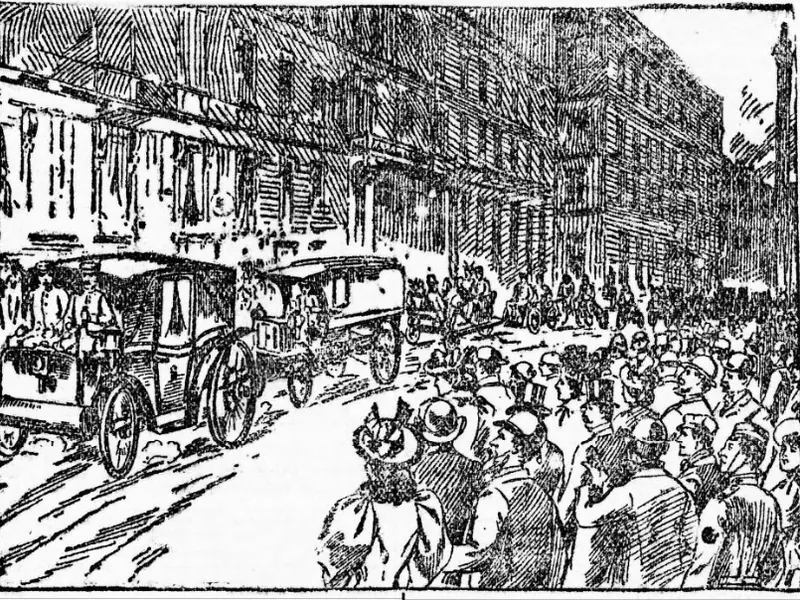
The Light Locomotives on Highways Act of 1896 raised the limit to 14 mph and ended the need for someone to walk in front. National Motor Museum: London to Brighton Veteran Car Run
To celebrate, Harry J. Lawson organised the “Emancipation Run” from London to Brighton on 14 November 1896, the day the Act became law. National Motor Museum: London to Brighton Veteran Car Run
Some 58 entries were received, but only about 33 are thought to have started. National Motor Museum: London to Brighton Veteran Car Run Most of the electric cars in the 1896 run finished the trip to Brighton by train. National Motor Museum: London to Brighton Veteran Car Run
The run was revived in 1927, and apart from the war years and petrol rationing it has been held every year since. National Motor Museum: London to Brighton Veteran Car Run Only cars built before 1 January 1905 can take part in the Veteran Car Run. National Motor Museum: London to Brighton Veteran Car Run
The 1996 centenary run had the most cars ever: 680. Royal Automobile Club: History of the Veteran Car Run The 1953 film Genevieve was about the run, and the car Genevieve still takes part every year. Royal Automobile Club: History of the Veteran Car Run
Licences, tests and the Highway Code
France brought in the first driving licences under a Paris police order of 14 August 1893. National Motor Museum: motoring FAQs
The Motor Car Act of 14 August 1903, in force from 1 January 1904, brought in driving licences, registration numbers and a 20 mph speed limit. National Motor Museum: motoring FAQs
The first driving lessons in Britain were offered in June 1900 by the Motor Carriage Supply Company of London. National Motor Museum: motoring FAQs
The test started on a voluntary basis on 13 March 1935. National Motor Museum: motoring FAQs The first British driving test pass certificate went to Mr R.E.L. Beere of Kensington on 16 March 1935. National Motor Museum: motoring FAQs
Britain’s driving test was made compulsory on 1 June 1935. GOV.UK: 80th anniversary of the driving test
The Highway Code was first published as a booklet in April 1931. It cost one penny. National Motor Museum: motoring FAQs
Keeping left became the law on all roads in Great Britain and Ireland in 1835. National Motor Museum: motoring FAQs Sweden drove on the left until 1967, then switched to the right. National Motor Museum: motoring FAQs
Making British cars
Britain’s 14 or 15 cars of 1895 had grown to about 700–800 by 1900. National Motor Museum: motoring FAQs Britain passed one million private cars in 1930, and ten million in 1967. National Motor Museum: motoring FAQs
The first petrol taxis appeared in London in 1903. National Motor Museum: Commercial Vehicles By 1905 there were 20 motor buses running in London. National Motor Museum: Commercial Vehicles
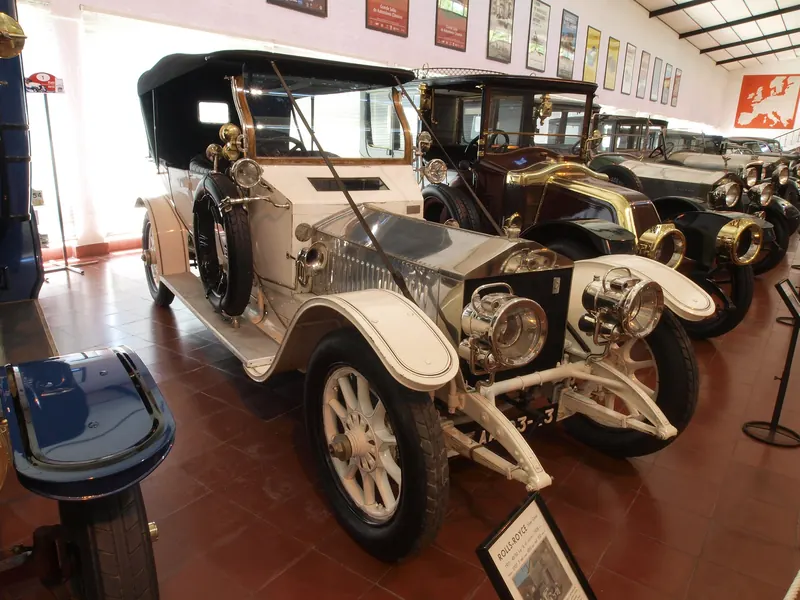
In the Edwardian era most makers built only the chassis. A coachbuilder then added a body to the customer’s own design. National Motor Museum: Edwardian Elegance Body names like coupé, landaulette and phaeton came straight from horse-drawn carriages. National Motor Museum: Edwardian Elegance
Morgan began building three-wheelers in 1910 and still makes cars, with a waiting list of customers. National Motor Museum: Small Cars, Small Firms
The Austin 7 of 1922 was a landmark in British motoring. National Motor Museum: The Family Market
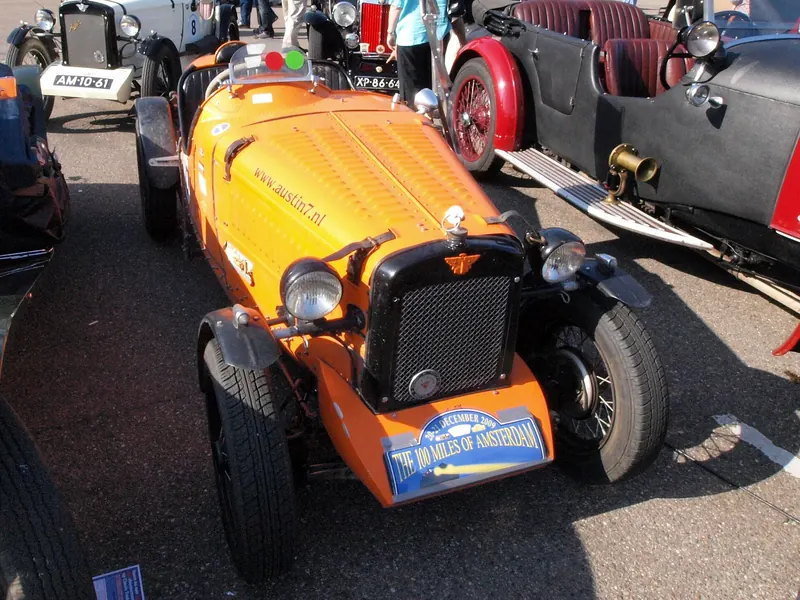
Britain taxed cars on horsepower worked out from the cylinder bore, which pushed makers towards small engines with narrow cylinders. Encyclopaedia Britannica: Automotive industry
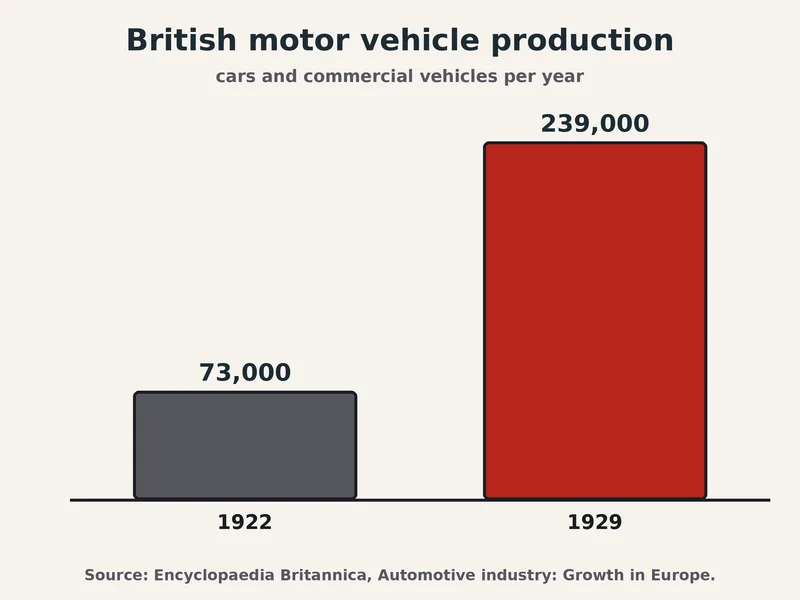
British motor vehicle production, counting cars and commercial vehicles, rose from 73,000 in 1922 to 239,000 in 1929, while the number of makers fell from 90 to 41. Encyclopaedia Britannica: Automotive industry, growth in Europe
William Morris, later Lord Nuffield, set out to copy Ford as early as 1912, but Morris Motors didn’t install a moving assembly line until 1934. Encyclopaedia Britannica: Automotive industry Ford has built cars in Britain since 1911, and Vauxhall was bought by General Motors in 1925. Encyclopaedia Britannica: Automotive industry, growth in Europe
Morris and Austin merged in 1952 to form the British Motor Corporation. Encyclopaedia Britannica: Automotive industry, growth in Europe Leyland and the British Motor Corporation joined in 1968 as British Leyland. Encyclopaedia Britannica: Automotive industry, growth in Europe
The Mini
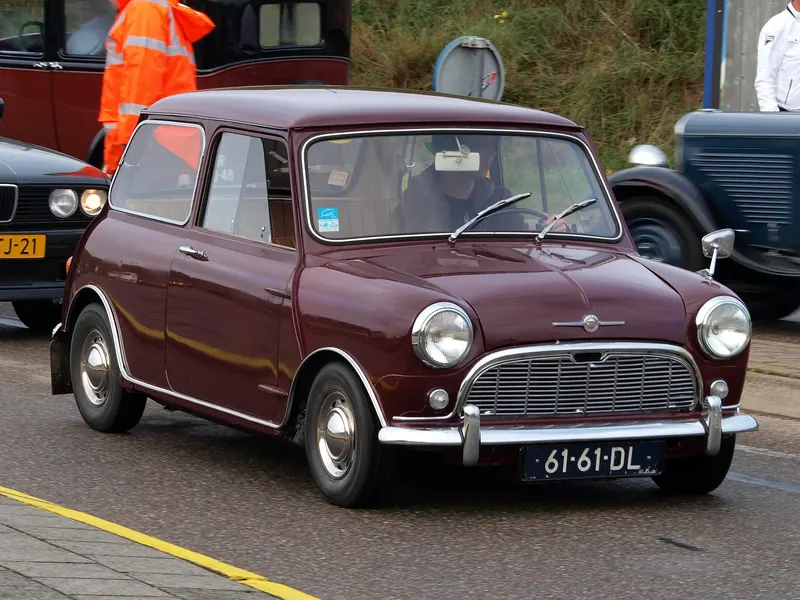
The Mini, designed by Alec Issigonis, was launched on 26 August 1959, with a transverse engine and front-wheel drive, a first for small cars. British Motor Museum: Mini Madness
More than five million Minis were made. British Motor Museum: Mini Madness At first the Mini was sold as the Morris Mini-Minor and the Austin Seven. It became simply “Mini”, with its own badge, in 1969. British Motor Museum: Archive News, Anniversaries
Roads, lights and motorways
The world’s first traffic signals were put up outside the Houses of Parliament on 10 December 1868, using railway-style semaphore arms and gas lamps. National Motor Museum: motoring FAQs
Britain’s first three-colour traffic lights, worked by hand, were used in Piccadilly, London, in 1926. Automatic ones followed in Wolverhampton in November 1927. National Motor Museum: motoring FAQs
Percy Shaw of Halifax patented the Cats Eye road stud in 1934. National Motor Museum: motoring FAQs
Britain’s first motorway, the 8¼-mile Preston By-pass, was opened by Prime Minister Harold Macmillan on 5 December 1958. It is now part of the M6. UK Motorway Archive: Statistics
The first 67 miles of the M1 opened in November 1959. It was built in only 19 months and had Britain’s first motorway service station, at Watford Gap. UK Motorway Archive: Statistics
Petrol, meters and clamps
The word “petrol” wasn’t used until 1896, when Carless, Capel & Leonard of Hackney Wick patented it. National Motor Museum: motoring FAQs
Roadside petrol pumps first appeared in St Louis, USA, in 1905, and in Britain in 1913. National Motor Museum: motoring FAQs In 1920 the Automobile Association opened Britain’s first roadside petrol station, at Aldermaston in Berkshire. National Motor Museum: motoring FAQs
Britain’s first self-service petrol pump opened in November 1961 at Southwark Bridge, London. National Motor Museum: motoring FAQs
Britain’s first parking meters appeared in Grosvenor Square, London, on 10 July 1958. The world’s first was in Oklahoma City in July 1935. National Motor Museum: motoring FAQs
Wheel clamps were first used on London’s streets in May 1983. National Motor Museum: motoring FAQs
The photographer Gladstone Adams had the idea for windscreen wipers on a drive home to Newcastle in 1908, and patented his design in 1911. National Motor Museum: motoring FAQs
Britain’s first motor museum opened in Oxford Street, London, on 31 May 1912, with more than forty cars built before 1903. National Motor Museum: motoring FAQs
Next: around the world →