Henry Ford and the Model T
A farm boy, a car for the multitude and a moving assembly line.
Henry Ford
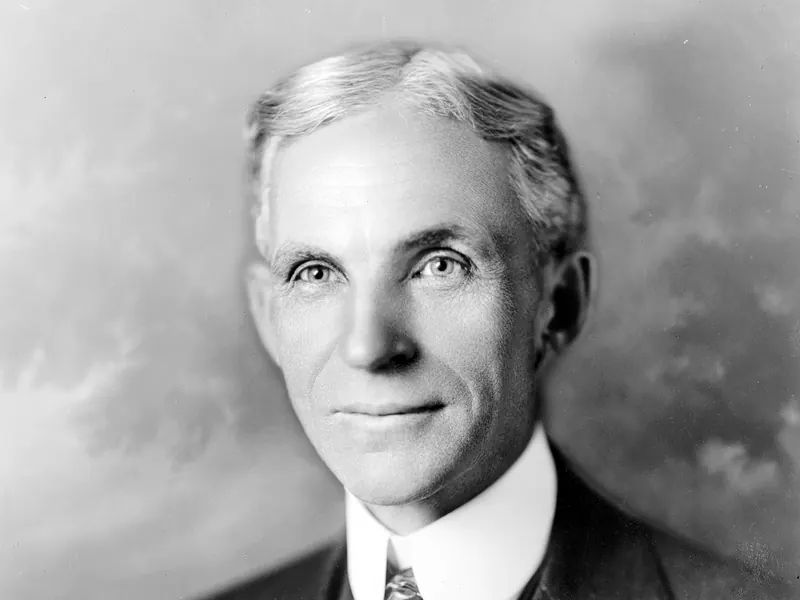
Henry Ford was one of eight children, born on the family farm near Dearborn, Michigan. Encyclopaedia Britannica: Henry Ford At 16 Henry Ford walked to Detroit to find work in its machine shops. Encyclopaedia Britannica: Henry Ford
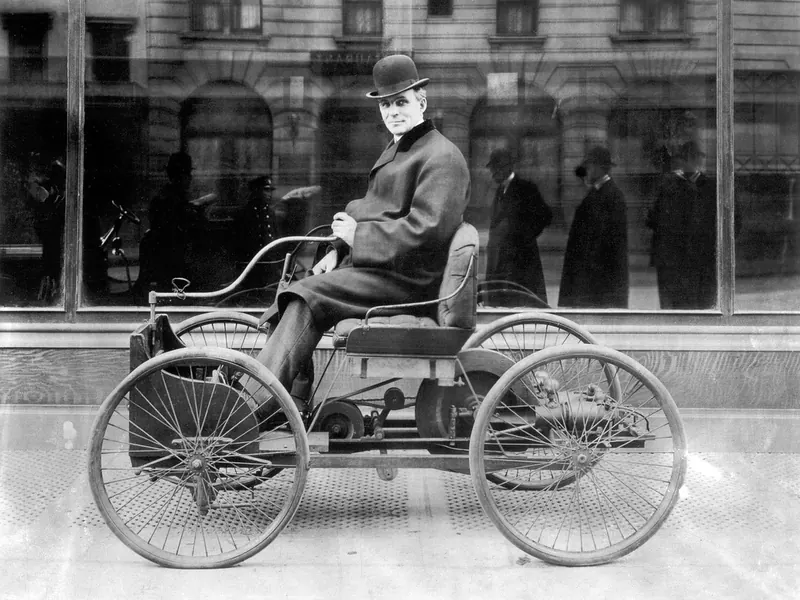
Ford finished his first car, the Quadricycle, in 1896: a buggy frame on four bicycle wheels. Encyclopaedia Britannica: Henry Ford
The Ford Motor Company was founded in 1903 by Henry Ford and 11 other investors. Encyclopaedia Britannica: Ford Motor Company The first Ford car, the original Model A, was put together at the Mack Avenue plant in July 1903. Encyclopaedia Britannica: Ford Motor Company
Ransom E. Olds made the first big bid for the mass market with the curved-dash Oldsmobile of 1901. Encyclopaedia Britannica: Automotive industry
The Model T
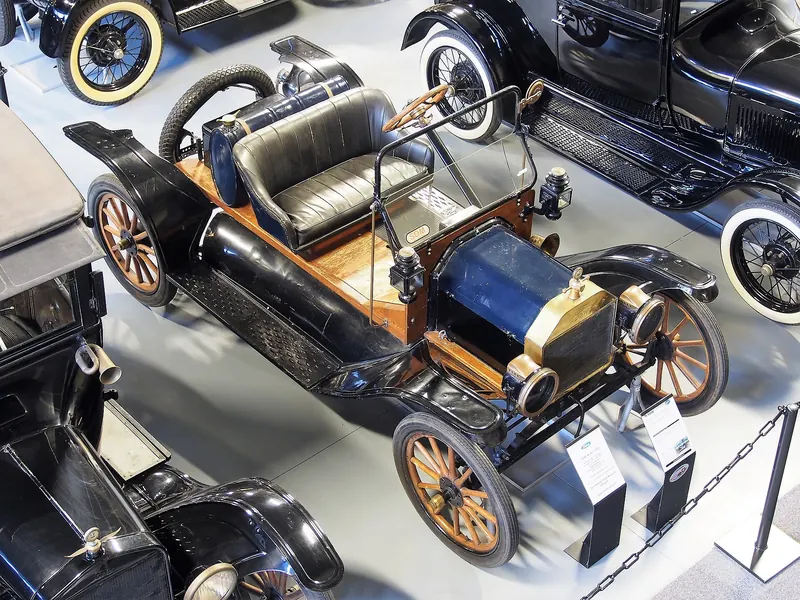
“I will build a motor car for the great multitude,” Ford said when he announced the Model T in October 1908. Encyclopaedia Britannica: Henry Ford
The Model T was built from 1908 until 1927. Encyclopaedia Britannica: Model T More than 15 million Model Ts were built. Encyclopaedia Britannica: Model T
At times the Model T made up as much as 40% of all cars sold in the United States. Encyclopaedia Britannica: Model T Model Ts were also put together at a Ford plant in Manchester, England. Encyclopaedia Britannica: Model T
- Its four-cylinder engine made 20 horsepower and gave a top speed of 40–45 mph. Encyclopaedia Britannica: Model T
- The Model T had two forward gears and one reverse, worked by three foot pedals and a lever. Encyclopaedia Britannica: Model T
- Fuel reached the engine only by gravity, so a Model T often had to climb a steep hill backwards. Encyclopaedia Britannica: Model T
- From 1913 to 1925 the Model T came in only one colour: black. Encyclopaedia Britannica: Model T
- People nicknamed the Model T the “Tin Lizzie” or the “flivver”. Encyclopaedia Britannica: Model T
The moving assembly line
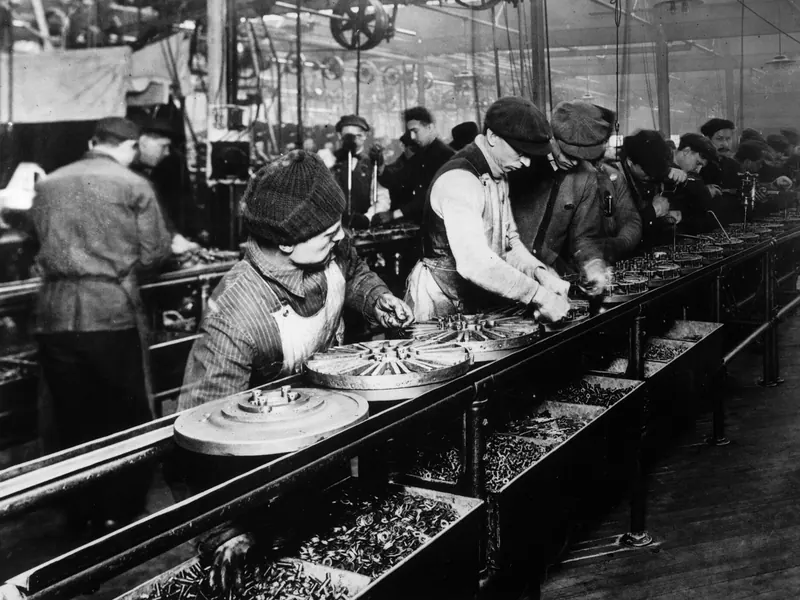
Ford introduced the world’s first moving assembly line for cars in 1913. Encyclopaedia Britannica: Ford Motor Company
The moving assembly line was first tried out on magnetos, a part of the engine’s ignition. Encyclopaedia Britannica: Automotive industry
At Highland Park, a complete chassis came off the line every 93 minutes, against the 728 minutes it used to take. Encyclopaedia Britannica: Henry Ford Mass production eventually let Ford turn out a Model T every 24 seconds. Encyclopaedia Britannica: Henry Ford
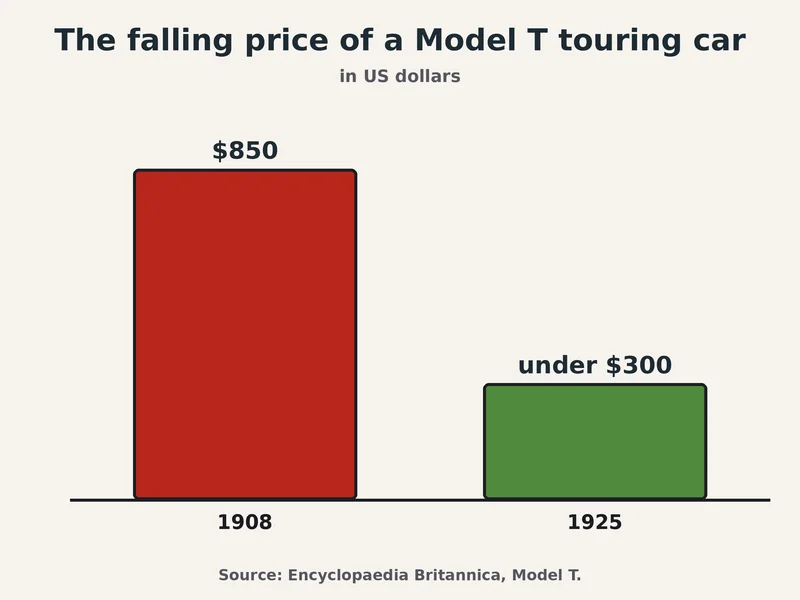
Assembly-line production cut the price of the Model T touring car from $850 in 1908 to under $300 in 1925. Encyclopaedia Britannica: Model T
In 1914 Ford began paying eligible workers $5 a day, against an industry average of $2.34, and cut the working day from nine hours to eight. Encyclopaedia Britannica: Henry Ford
By mid-1914 there were more than 500,000 Model Ts on the world’s roads. Encyclopaedia Britannica: Ford Motor Company By 1926 Ford was making half of all the motor vehicles in the world. Encyclopaedia Britannica: Automotive industry
Rivals and the courts
Ford fought the Selden patent, which claimed to cover every petrol car. He lost in 1909, appealed and won in 1911. Encyclopaedia Britannica: Henry Ford
In 1908 at the Royal Automobile Club in London, three Cadillacs were taken apart, their parts mixed, and the cars rebuilt and driven 500 miles without trouble. Encyclopaedia Britannica: Automotive industry
General Motors was founded in 1908 by William C. Durant, a carriage maker from Flint, Michigan. Encyclopaedia Britannica: Automotive industry By 1929 the “Big Three”, General Motors, Ford and Chrysler, supplied three-quarters of the American market. Encyclopaedia Britannica: Automotive industry
After the Model T
Ford introduced the V-8 engine in 1932. Encyclopaedia Britannica: Automotive industry
The Ford Mustang arrived in 1964 and soon became an American icon. Encyclopaedia Britannica: Ford Motor Company
Next: motoring in Britain →